
Institutional Development Plan (IDP)
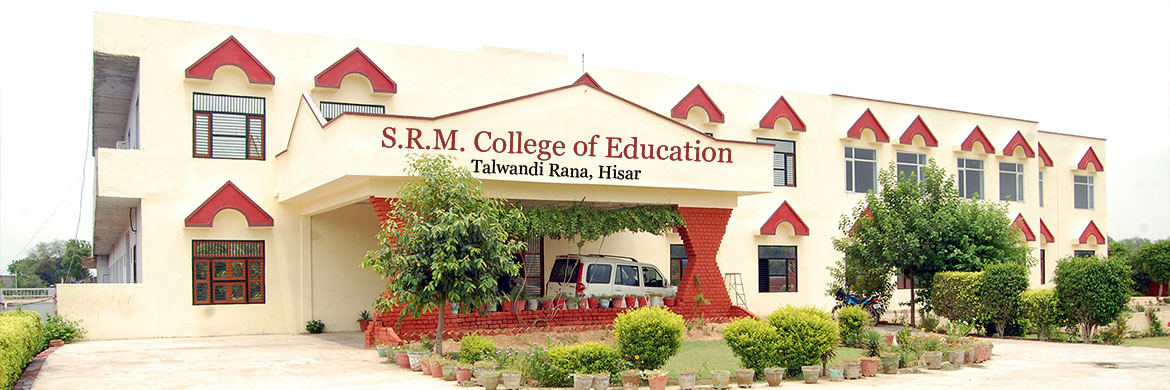
S.R.M. College of Education, Talwandi Rana (Hisar)
Affiliated to Ch. Ranbir Singh University (CRSU)
Introduction
S.R.M. College of Education has been committed to providing high-quality, inclusive education that empowers future educators to excel academically, professionally, and socially. Since its establishment in 2006, the College has steadily grown to offer programs aligned with university regulations, national standards, and global best practices. Our goal is to create a supportive and student-centered learning environment that fosters intellectual growth, personal development, and social responsibility.
This Institutional Development Plan (IDP) outlines the strategic priorities of the College for the period 2023–2030, focusing on strengthening academic programs, enhancing infrastructure, supporting student development, promoting research, and facilitating community engagement. The plan emphasizes practical actions and measurable outcomes to ensure continual growth and institutional effectiveness.
Key Areas of Focus
1. Academic Excellence and Innovation
- Encourage faculty to adopt innovative teaching-learning methods, including participatory classroom activities, experiential learning, and collaborative projects.
- Expand partnerships with industries, educational institutions, and NGOs to provide internships, workshops, and real-world exposure.
- Integrate digital learning tools, e-resources, and virtual classrooms to enhance accessibility and flexibility.
- Develop leadership, teamwork, and communication skills through student-led initiatives and group projects.
- Provide career guidance, skill-building workshops, and professional mentoring to support employability and holistic development.
2. Infrastructure and Learning Environment
- Upgrade classrooms, laboratories, and libraries with modern equipment and learning aids to create an engaging academic environment.
- Strengthen internet connectivity, digital libraries, and smart classrooms to support blended and self-paced learning.
- Ensure safety, hygiene, and wellness by improving hostel facilities, counseling services, and recreational spaces.
- Implement eco-friendly practices, including energy conservation, sustainable waste management, and green campus initiatives.
3. Student Support and Empowerment
- Offer scholarships, financial aid, and mentorship programs to support students’ educational and personal growth.
- Promote active participation in student clubs, societies, and cultural, academic, and social events.
- Create a safe, inclusive, and gender-sensitive environment that encourages open dialogue.
- Organize awareness programs and workshops on mental health, career planning, life skills, and overall well-being.
4. Research, Collaboration, and Community Engagement
- Facilitate research-oriented projects and practical learning experiences addressing social, educational, and environmental challenges.
- Build partnerships with industries, academic institutions, and civil society organizations to broaden exposure and learning opportunities.
- Encourage faculty participation in professional development programs, webinars, and national or international seminars.
- Support community outreach initiatives such as literacy drives, health awareness campaigns, and environmental conservation programs.
5. Governance, Monitoring, and Quality Assurance
- Implement structured feedback systems for students, faculty, alumni, and stakeholders to guide academic and administrative improvements.
- Use digital tools for record-keeping, reporting, and academic monitoring to enhance efficiency and transparency.
- Conduct periodic reviews to assess the progress of planned initiatives and their alignment with institutional goals.
- Promote ethical practices, accountability, and participative governance across academic and administrative functions.
Implementation and Monitoring Framework
The IDP will be implemented systematically over the period 2025–2030, with defined objectives, measurable indicators, and regular monitoring. Each initiative will be tracked using Key Performance Indicators (KPIs) to ensure effectiveness, transparency, and continuous improvement.
|
Plan Period |
Focus Areas |
Key Performance Indicators (KPIs) |
Monitoring & Review |
Download Plan Document |
|
2023-2025 |
||||
|
2025–2027 |
[Upload PDF] |
|||
|
2027–2029 |
[Upload PDF] |
|||
|
2029–2030 |
[Upload PDF] |
(The documents for each plan cycle will be made available for download once finalized.)
Conclusion
S.R.M. College of Education remains dedicated to fostering academic excellence, personal growth, and social responsibility among its students. Through structured planning, practical initiatives, and collaborative efforts, the College aims to create a dynamic learning environment that empowers learners to excel in their professional and personal lives. This Institutional Development Plan reflects our ongoing commitment to educational innovation, holistic development, and sustainable practices.